|
Part 1
Click
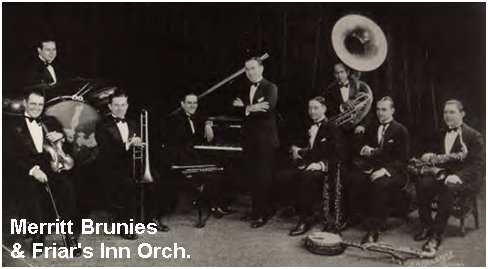
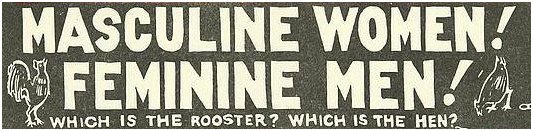
Merrit Brunies & His Friar's Inn Orchestra - Masculine Women, Feminine Men (1926) Welcome to Queer Music History 101. I'm JD Doyle and this is a special edition of my radio show and website Queer Music Heritage. I'm designing this show as sort of a study guide, and I hope it appeals to those LGBT Studies courses now found at many universities around the country. So this will be a two-hour crash course, and you have no idea how difficult it was to keep it to that, as I've been doing my QMH show for over ten years, and have about 250 hours of programs archived on my site. I'll be using short song clips, but online I'll have links to full versions of the songs, and also to more in-depth information. That of course is at QueerMusicHeritage.com. The two parts of this series will go up through 1985, but I figured a good place to start was 1926 and a song sort of complaining about it all. |

 |
  And click for more information on this song.
 |
|
The song is "Masculine Women Feminine Men" and is by Merritt Brunies & His Friar's Inn Orchestra. That version is from the UK and is one of 15 recordings I know of that song. And that song of course was not done by gay or lesbian artists, and back then the B and T of LGBT were not even talked about. I'll be keeping almost exclusively to artists who actually were gay, lesbian, bi or transgender, and I guess I should pause a moment and acknowledge that I talk about queer music like everyone knows what that means. I've got a study guide for this show on my site, where I much expand on the subject, but for right now, I'll say it's music that speaks openly about the LGBT experience. And to me the obvious place to start is 1928 and the Blues, and the obvious song is by the Mother of the Blues, Ma Rainey. It's the "Prove It On Me Blues" and is a Blues classic and often recorded. Listen for my favorite line in the song, "I went out last night with a gang of my friends, they must have been women, cause I don't like no men." Ma
Rainey - Prove It On Me Blues (1926) |
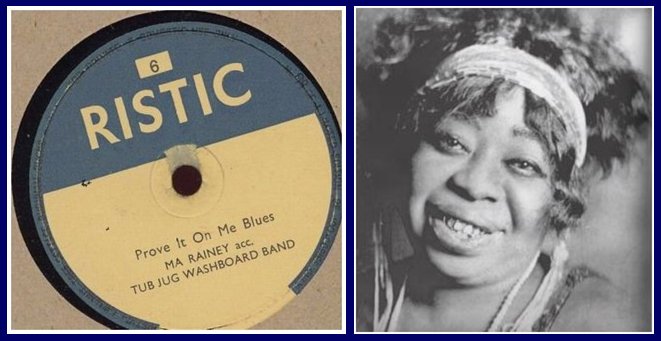 |
Ma Rainey - Prove
It On Me Blues (1928) Often considered the Mother of the Blues |
 |
Bessie Jackson -
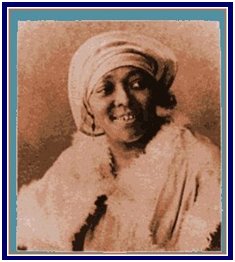
B.D. Woman's Blues (1935) Also recorded under the name Lucille Bogan See QMH shows for June 2004 and Oct 2007 She is known for recording some very raunchy blues records |
The photo at the left appears to be the Only one of Bessie Jackson, per google |
|
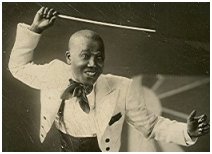
I went from Ma Rainey into one of the best known songs by Bessie Jackson, who also recorded under the name Lucille Bogan. In 1935 she released "B.D. Women Blues" and the B.D. stood for Bull Dykes or more colloquially Bull Daggers. Time constraints prevent me from playing a number of other artists, like Bessie Smith and Gladys Bentley. And students may want to ask themselves, why was it for the most part only the women who were so musically outspoken? There is one male blues artist I want to mention, Frankie "Half-Pint" Jaxon, who often sang his songs as a female impersonator, which probably made it easier for him in 1929 to sing "My Daddy Rocks Me With One Steady Roll." Frankie "Half-Pint" Jaxon - My Daddy Rocks Me With One Steady Roll (1929) |
 |
Early Blues was pretty much an anything-goes medium. Why do you think was it for the most part only the women who were so musically outspoken about same-sex matters? |
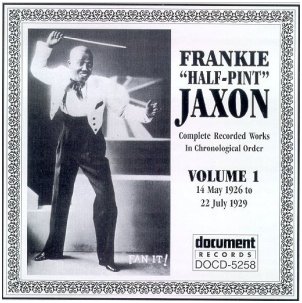 |
Frankie "Half-Pint"
Jaxon - My Daddy Rocks Me With One Steady Roll (1929) |
 |
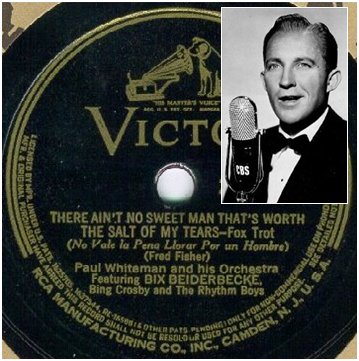 |
Bing Crosby - Ain't
No Sweet Man Worth the Salt of My Tears (1928) See QMH show for June 2004 |
 |
|
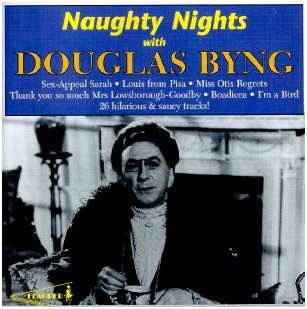
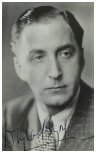
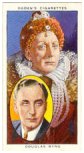
Bing Crosby - Ain't No Sweet Man Worth the Salt of My Tears (1928) It is probably incredible to believe that in 1928 the very heterosexual Bing Crosby recorded the song "Ain't No Sweet Man Worth the Salt of My Tears." And that's the only example I have time to give of "cross-vocals." These are songs intended to be sung by a woman but are instead sung by a man, keeping those pronouns intact. They sound pretty gay now, but are only gay in hindsight. Here's the explanation. In the late 20s and early 30s music publishers had a stranglehold on the rights to their catalogs. Singers could not change a word, period, so it was not uncommon for a man to seemingly sing a song to a man, or a woman to a woman. The public knew of the restrictions on singers and did not really pay attention to any gay connotations. That just wasn't in their consciousness. But today we do, which make these a lot of fun. Oh, take a mental note for this show. I'm going to play many pairs of songs, where I'll break out of one and go to the other. This may not always be a smooth transition, as gee, I chose these pairings for their history and not music compatibility. Douglas Byng & Lance Lister - Cabaret Boys (1928) |
  |
Douglas Byng &
Lance Lister - Cabaret Boys (1928) Click for a 1932 video of Byng singing in drag
|
 |
| Recommended Autobiography: "As You Were, Reminiscences by Douglas Byng," (1970) |
|
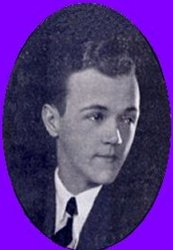
From the UK that was Douglas Byng and Lance Lister with their 1928 song "Cabaret Boys," which is the perfect introduction to the next topic. In the late 20s and early 30s there was a phenomenon known now as The Pansy Craze. This was when openly gay performers experienced a surge in popularity in the nightclubs of the country's major cities. I'm going to give you short clips of two of the most popular of these performers. Jean Malin sings "I'd Rather Be Spanish Than Manish," from 1931, and Bruz Fletcher gets catty with "She's My Most Intimate Friend," from 1937. And the history question for this time period would be to explain what cultural forces happened to open this brief window of popularity, and then what closed that window. Again, I wish I had time to flesh out the personalities of these artists a bit, but my website can do that for you. Jean Malin and Bruz Fletcher. Jean
Malin - I'd Rather Be Spanish Than Manish (1931) |
|
In the late 20s and early 30s there was a phenomenon known now as The Pansy Craze. This was when openly gay performers experienced a surge in popularity in the nightclubs of the country's major cities. Explain what cultural forces happened to open this brief window of popularity, and then what closed that window. Click Here. |
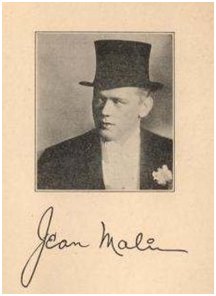 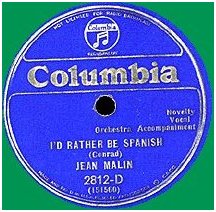 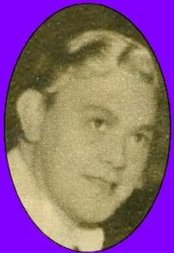 |
Jean Malin - I'd
Rather Be Spanish Than Manish (1931) See QMH show for May 2010 |
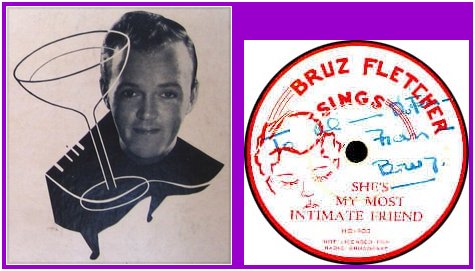 |
Bruz Fletcher -
She's My Most Intimate Friend (1937) See QMH show for May 2010 |
 |
| Recommended Book: "Gay New York: Gender, Urban Culture, and the Making of the Gay Male World, 1890 - 1940," by George Chauncey, (1995). A number of chapters cover the time period of what is now known as the Pansy Craze. |
| Recommended Biography: "Bruz Fletcher: Camped, Tramped & A Riotous Vamp" by Tyler Alpern (2010) |
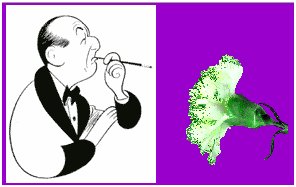 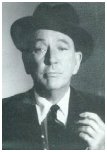 |
Noel Coward - Green
Carnation (1933) See QMH shows for July 2000 and June 2004 The only clip I know of of Coward singing the song himself is only 48 seconds long, so I added at the end of it a full version from 1967 by Edward Earle & the Satisfactions |
| Recommended Biographies:
"Noel & Cole: The Sophisticates," by Stephen Citron, (1992); "Genius & Lust: The Creative and Sexual Lives of Cole Porter and Noel Coward," by Joseph Morella & George Mazzei, (1995); and "My Life with Noel Coward," by Graham Payn (1994) |
|
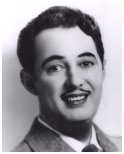
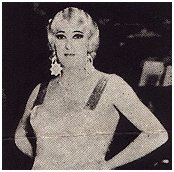
And I threw in a bit of Noel Coward in that set. And while I do not consider him as a Pansy Craze artist, he wrote the song "Green Carnation" for his 1933 musical "Bittersweet." In it fashionable gay men in England in the 1890s could be identified by their green carnations. And this is a good place to slip in the sort of recitation singing style of Ray Bourbon. He was our culture's most prolific female impersonator, with recordings spanning from the 30s through the 60s. He died in prison in Texas in 1971, but that's a whole other very colorful story. Let me give you a history reference point. In 1952 Christine Jorgensen had her famous sex-change operation, so this was still in the news. So, around 1956 Ray Boubon changed the spelling of his first name from R-a-y to R-a-e and released an album called "Let Me Tell You About My Operation," in which he played to the hilt his sex change, which was all hype, never happened. I did tell you he was colorful. Here's a bit of the title track. Rae
Bourbon - Let Me Tell You About My Operation (1956) |
 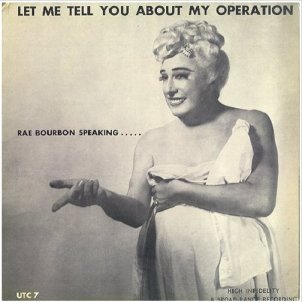 |
Rae Bourbon - Let
Me Tell You About My Operation (1956) See QMH show
for May 2010 |
 |
 |
Jose Sarria - A
Good Man Is Hard To Find (1960) See QMH show for Oct 2000 |
 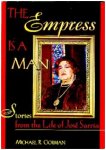 |
| Recommended Autobiography: "The Empress Is A Man," by Jose Sarria, with M. Gorman (1998) |
|
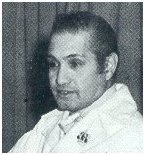
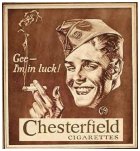
That was Jose Sarria, and I think he's one of our history's heroes. Along with a long performing career in drag in San Francisco, mainly at a club called The Black Cat, he was also political and community-minded. He ran, although unsuccessfully, for the Board of Supervisors, in 1961, which was twelve years before Harvey Milk first ran, in 1973. And he also founded the Imperial Court system, and was its first Empress. That system is still going strong today, with chapters all over North America, and their fundraising efforts over the years for gay & lesbian charities have been enormous. And, did anyone notice a sort of gap in this story? Where were the openly gay & lesbian artists during the 1940s and 1950s? Did they just stay in the closet during World War II and the Joseph McCarthy years? I have examples of straight women singers like Nan Blakstone and Ruth Wallis doing relatively friendly gay novelty songs, and then there's this not so friendly parody commercial, from I believe the 50s. Chesterfield Cigarettes commercial (1950s) |
|
There was a noticeable gap in recordings by openly gay & lesbian artists around this time. Where were the openly gay & lesbian artists during the 1940s and 1950s? Did they just stay in the closet during World War II and the Joseph McCarthy years? Examples of closeted artists: Liberace, Tab Hunter, Johnnie Ray, Kaye Ballard, etc. |
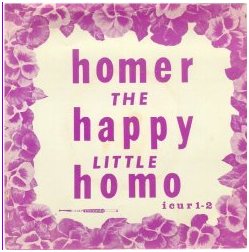 |
Byrd E Bath - Homer
the Happy Little Homo (1963) |
 |

|
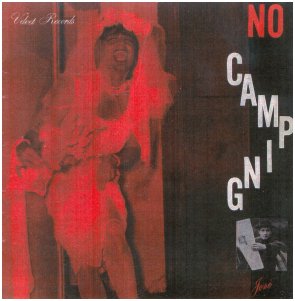
And this is a good time to mention one of our mysteries. In the early 1960s a record label called Camp Records released two albums and a dozen 45s, pretty much exemplifying camp humor, with all of its mincing stereotypes. They were very coy on the album jackets as to who the singers really were, either, they said, as an attempt at protecting them or perhaps, I think, hyping the product. Who knows? And who knows who were really behind the label. All the singers' names were obviously made up, like B. Bubba, Sandy Beech, Max Minty & the Gay Blades, and this one, by Byrd E Bath. It's called "Homer the Happy Little Homo." Byrd
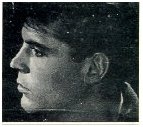
E Bath - Homer the Happy Little Homo (1963) I followed "Homer the Happy Little Homo" with one not so happy, or in this case, not so-gay friendly. In 1966 Teddy & Darrel released an LP called "These Are the Hits, You Silly Savages." And the super-stereotypical limp-voiced "Strangers In The Night" was the 45 from that album. The story I heard on this one is that the album was an effort to track homosexuals. Here's the plan, you release an album, and track the sales of it to see where those creatures live. The record label was owned by Mike Curb, the then future mega successful record producer and future very conservative lieutenant governor of California. The plan didn't work because record sales were just too spread out. I'd love for someone to dig into this rumor and let me know if it's the real story. |
 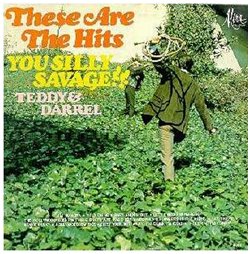  |
Teddy & Darrel
- Strangers In The Night (1966) See QMH show for Sep 2002 |
|
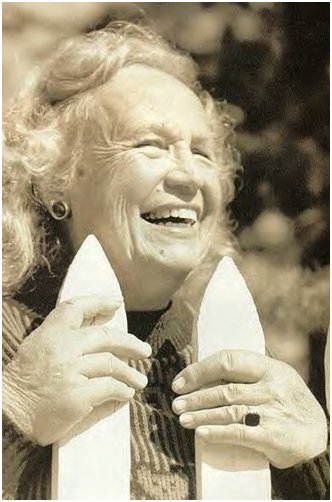
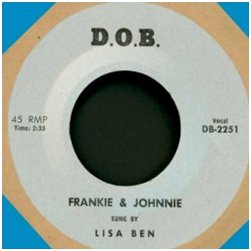
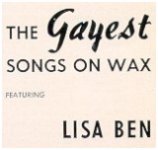
In the late 1940s Lisa Ben was known in her Los Angeles community as a newsletter publisher and entertainer at parties. For the newsletter part, this was historic. In 1947 on her own she wrote and published the newsletter Vice Versa, which was the very first lesbian publication, or gay publication, for that matter. In fact the name she used, Lisa Ben, was an anagram for…have you guessed already? Yes, lesbian. In 1960 the organization Daughters of Bilitis sponsored the release of a 45 rpm record by her. She was known for her parodies, and this one was of "Frankie & Johnny." Lisa Ben - Frankie & Johnny (1960) |
  |
Lisa Ben - Frankie
& Johnny (1960) See QMH show for June 2004 |
 |
|
That one was likely never intended to do much commercially, but this one was and homophobia stopped it cold. In 1964 a nightclub singer in L.A. named Troy Walker released his first album, "Troy Walker Live," which obviously captured elements of his shows. Even though he was a very flamboyant performer, one song worked well live, but not on vinyl, as distributors sent the album back, big time. They felt their customers were just not ready for a song with a man singing to a man, as in Troy's version of a song made popular by Judy Garland, "Happiness Is a Thing Called Joe." Troy Walker - Happiness Is a Thing Called Joe (1964) |
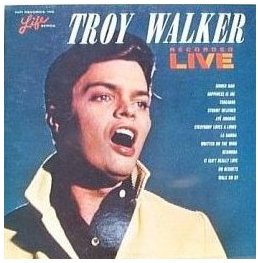 |
Troy Walker - Happiness
Is a Thing Called Joe (1964) See QMH show for Aug 2010 Click
for More Information |
  |
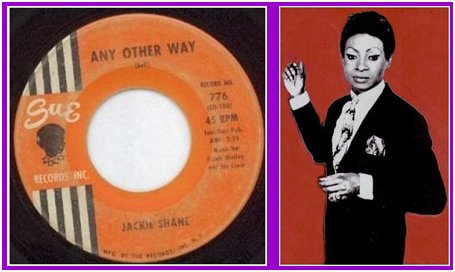 |
Jackie Shane - Any
Other Way (1963) |
 |
|
Homophobia didn't seem to bother an American artist named Jackie Shane much, but then he was performing mainly in the lounge circuit in Toronto. Crowds came for his silky smooth voice as much as his flamboyant effeminate stage persona. And he got a hit record along the way, at least in Canada where reached number 2 on the charts in 1963. His songs lyrics say "tell her that I'm happy, tell her that I'm gay, tell her that I wouldn't have it, Any Other Way." Jackie Shane - Any Other Way (1963) A jazz great is definitely Billy Strayhorn, who was a songwriting and arranging genius, and who was a big reason for the success of the Duke Ellington Orchestra. That orchestra first performed Billy's classic song "Lush Life" at Carnegie Hall in 1948, and countless people have recorded the song since, but I want you to hear it by Billy Strayhorn himself, in a 1964 recording. Billy Strayhorn - Lush Life (1964) |
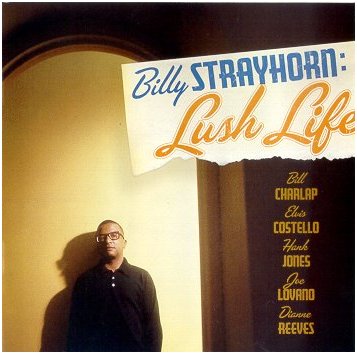 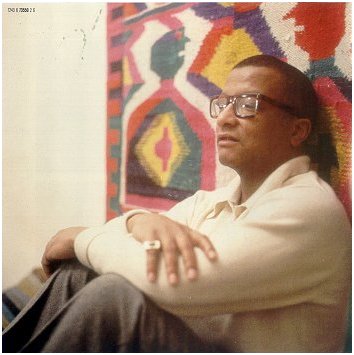 |
Billy Strayhorn
- Lush Life (1964) See QMH show for Feb 2003 |
 |
| Recommended Biography: "Lush Life: A Biography of Billy Strayhorn," by David Hajdu (1996) |
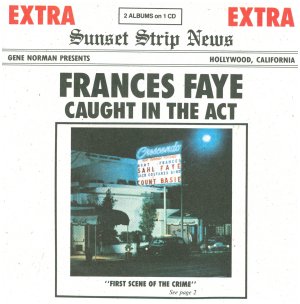 |
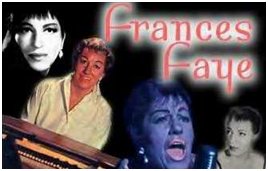
Frances Faye - Night
And Day (1959) |
 |
|
Frances Faye - Night And Day (1959) Yes, jazz artist Frances Faye was gay gay gay, as you could hear in the song "Night and Day," from her 1959 album "Caught in the Act." She was in fact fairly open about her sexuality, especially given the times in which she was most popular, from the 40s through the 60s. I want to slip in this next artist, not because she was ever accused of being a good singer, but to my mind it was pretty radical for a female impersonator to release an album in 1968 that was not comprised of comedy routines or cabaret standards. The artist was Minette, which was her real last name, and the songs on her album were all written by her and were very topical. Again, this was 1968 and all over the news was the hippie movement, psychedelic drugs and the Vietnam war, and she dealt with all those subjects. So I picked the only queer song you'll ever hear about Lyndon Johnson. It's called "LBJ, Don't Take My Man Away." Minette - LBJ, Don't Take My Man Away (1968) |
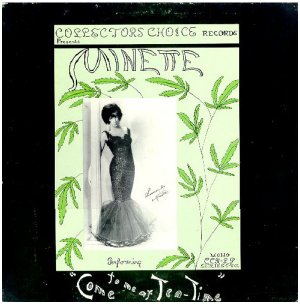 |
Minette - LBJ, Don't
Take My Man Away (1968) |
   |
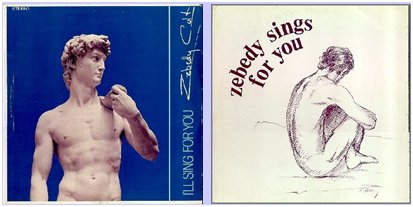 |
Zebedy Colt - The
Man I Love (1970) |
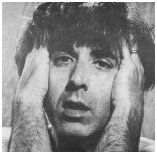 |
|
And you may ask, surely there must have been gay cabaret in these years, and you'd be right, and I've three albums in mind, none of which were very commercially done, but all were blatantly man on man lyrics. So I've put them in a mini-medley. First is Zebedy Colt from his 1970 album "I'll Sing For You," and then there are two tracks from albums where the singers were not identified. One was called "Love Is A Drag," from 1962, and you need to see the cover of that one. It has two guys in the shadows, and says on the front "For Adult Listeners Only," as if the very act of singing even those tame lyrics to another man made it only for adults. It gets better. On the back the LP jacket goes on about how brave the singer was, but then does not name him. And the other nameless singer was on the album "Mad About the Boy," from the mid-60s. That was done by that Camp Records label I played for you earlier. The songs are "The Man I Love," "My Man," and "Mad About the Boy." Zebedy
Colt - The Man I Love (1970) |
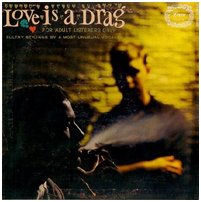 |
Love Is A Drag
- My Man (1962) |
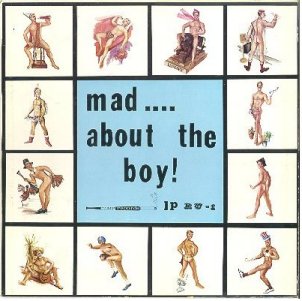 |
| Recommended Book: "Intimate Nights: The Golden Age of New York Cabaret," by James Gavin, (2006). Mostly straight artists, covering the 30s to the Present, but plenty of G&L to interest. |
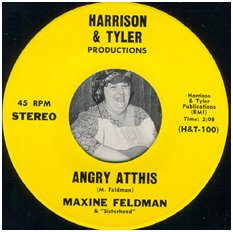 |
Maxine Feldman -
Angry Atthis (1972) |
 |
|
Maxine
Feldman - Angry Atthis (1972) After Maxine Feldman was Madeline Davis, and her song, written in 1971 was called "Stonewall Nation." It was written after she participated in her first gay march in Albany NY. And she got to sing it at her second gay pride march, and for years she sang it at many pride venues. She wasn't just singing during those years. She was one of the early members of the Mattachine Society of the Niagara Frontier, and was president of that chapter in 1972. One of her biggest accomplishments was in 1972 when she was elected as the first openly lesbian delegate to a major national political convention. It was of course the Democratic convention that nominated McGovern, and Jim Foster from San Francisco that same year was first gay male delegate. She has other educational and literary accomplishments but I'll let you find those on my website. |
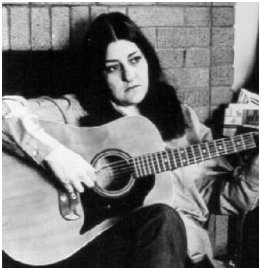 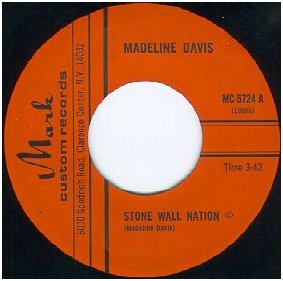 |
Madeline Davis -
Stonewall Nation (1972) |
| Very Recommended Book: "Boots of Leather, Slippers of Gold: The History of a Lesbian Community," by Elizabeth L. Kennedy and Madeline Davis, (1993). A Lambda Award winning study of the Buffalo lesbian community from the mid-1930s to the early 1960s. |
|
The song by Madeline Davis is the earliest one I know of about the Stonewall Riots. But Stonewall has inspired many songwriters and artists over the years. An interesting question is how have the attitudes about Stonewall changed over time in songs about it? A collection of all the major songs can be heard on This Show. |
|
Lavender
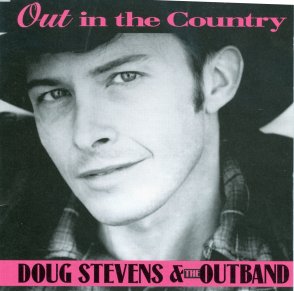
Country - Back in the Closet Again (1973) I jumped way ahead for that one, but it was to make a point. "Lavender Country" was the first full-length openly gay country album, in 1973, and it took until 1993, twenty years later, for the second, "Out in the Country," by Doug Stevens & the Outband. A good essay would be on why there was this gap in artists doing openly gay country music. And I do believe for the most part the gap continues. Also, why has the field of country music been seemingly more prone to produce homophobic novelty songs, and how has that changed over the years? |
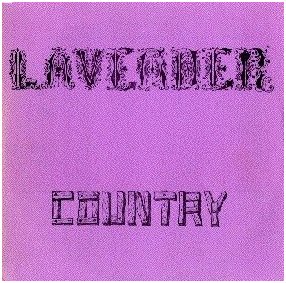 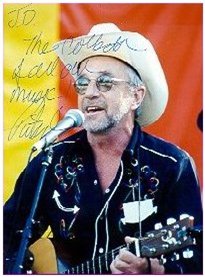 |
Lavender Country
- Back in the Closet Again (1973) |
 |
|
"Lavender Country" was the first gay country album, and it took 20 years until the second. Why there was this gap in artists doing openly gay country music. And why has the field of country music been seemingly more prone to produce homophobic novelty songs, and how has that changed over the years? See QMH for April 2005 |
|
My next category is musicals, and 1973 saw the first openly gay one. I believe you would consider a musical named "The Faggot" as openly gay. Characters in the show included Oscar Wilde, Gertrude Stein, Alice B. Toklas and Catherine the Great, so I assume the plot was a bit catch-as-catch can, but it started out queer from the first song, "Women With Women, Men With Men." The
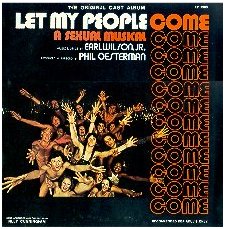
Faggot - Women With Women, Men With Men (1973) Attracting a lot more attention the next year, 1974, was the hit show "Let My People Come." Now, it was not at all a quote unquote "gay musical." It was a sexual musical, including all the bases, and it included a gay song and a lesbian one. From the cast you heard Marty Duffy and Joe Jones sing "I'm Gay." Okay, bonus question, how have the depictions of gay and lesbian people changed in musicals since 1973? |
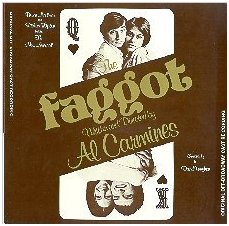 |
The Faggot - Women
With Women, Men With Men (1973) See
my Gay Musicals Section |
 |
|
How have the depictions of gay and lesbian people changed in musicals since 1973? |
| Recommended Book: "Something for the Boys: Musical Theatre and Gay Culture," by John M. Clum, (2001). Why do gay men love musical theatre? This book explores that. |
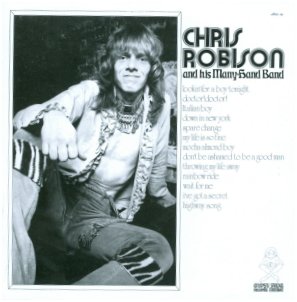 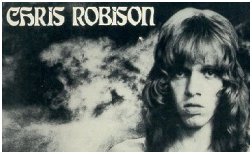 |
Chris Robison -
Lookin' For A Boy Tonight (1973) |
|
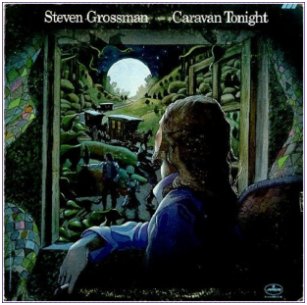
The year 1973 also brought one of the first openly gay rock albums. The act was called Chris Robison and his Many Hand Band, and while it contained several very gay songs, the most gay was "Lookin' For A Boy Tonight." Chris Robison - Lookin' For A Boy Tonight (1973) And up next is some history. In 1974 Steven Grossman had the distinction of being the first artist to have a lyrically gay album released by a major label. The label was Mercury and the album was "Caravan Tonight," and the most known song from it is called "Out." I'm sharing with you the whole song, as you really need to hear how it builds to its end. Steven Grossman, and "Out." Steven Grossman - Out (1974) |
  |
Steven Grossman
- Out (1974) |
 |
|
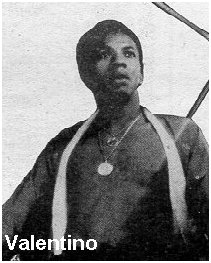
This is JD Doyle, and I'm closing Part 1 of Queer Music History 101. You'll have to listen to Part 2 to hear about the Women's Music Movement, Disco, Glam Rock, Chorus music, Folk music and much more. Ending this part is a pair of historic dance records. Now, you don't normally think of Motown Records and gay recordings in the same breath, but there's reason to. And the result is, if you will, a gay liberation disco song. There's no confusing the song's lyrics. They include the lines "I'm happy, I'm carefree and I'm gay, yes, I'm gay, taint no fault, tis a fact I was born this way." Here's the story, Bunny Jones, a straight business woman and music world wannabee, owned several beauty salons, knew scads of gay people, and was inspired to write the song "I Was Born This Way." She got a singer named Charles Harris to record it, changed his name to Valentino, and got Motown to release it. This was 1975. Not much happened, mainly because Motown did little to promote it. They changed their minds a couple years later, and got Carl Bean to do a more updated version. Bean later founded the Unity Fellowship Church and became Bishop Carl Bean, and his version's been remixed and released several more times over the years. Hit or no, it's a historically out of the closet dance song, so here's a mash-up of both versions, by Valentino and Carl Bean. Valentino
- I Was Born This Way (1975) |
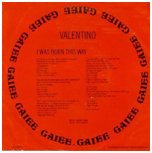 |
Valentino - I Was
Born This Way (1975) |
 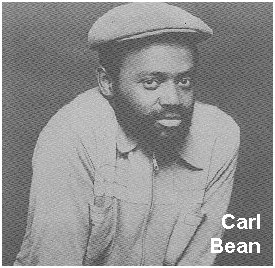 |
| Recommended Autobiography: "I Was Born This Way: A Gay Preacher's Journey Through Gospel Music, Disco Stardom, and a Ministry in Christ," by Archbishop Carl Bean, (2010) |
|
|